

Blog > Ready to Move Up? Your MS Gulf Coast Starter Home Can Help
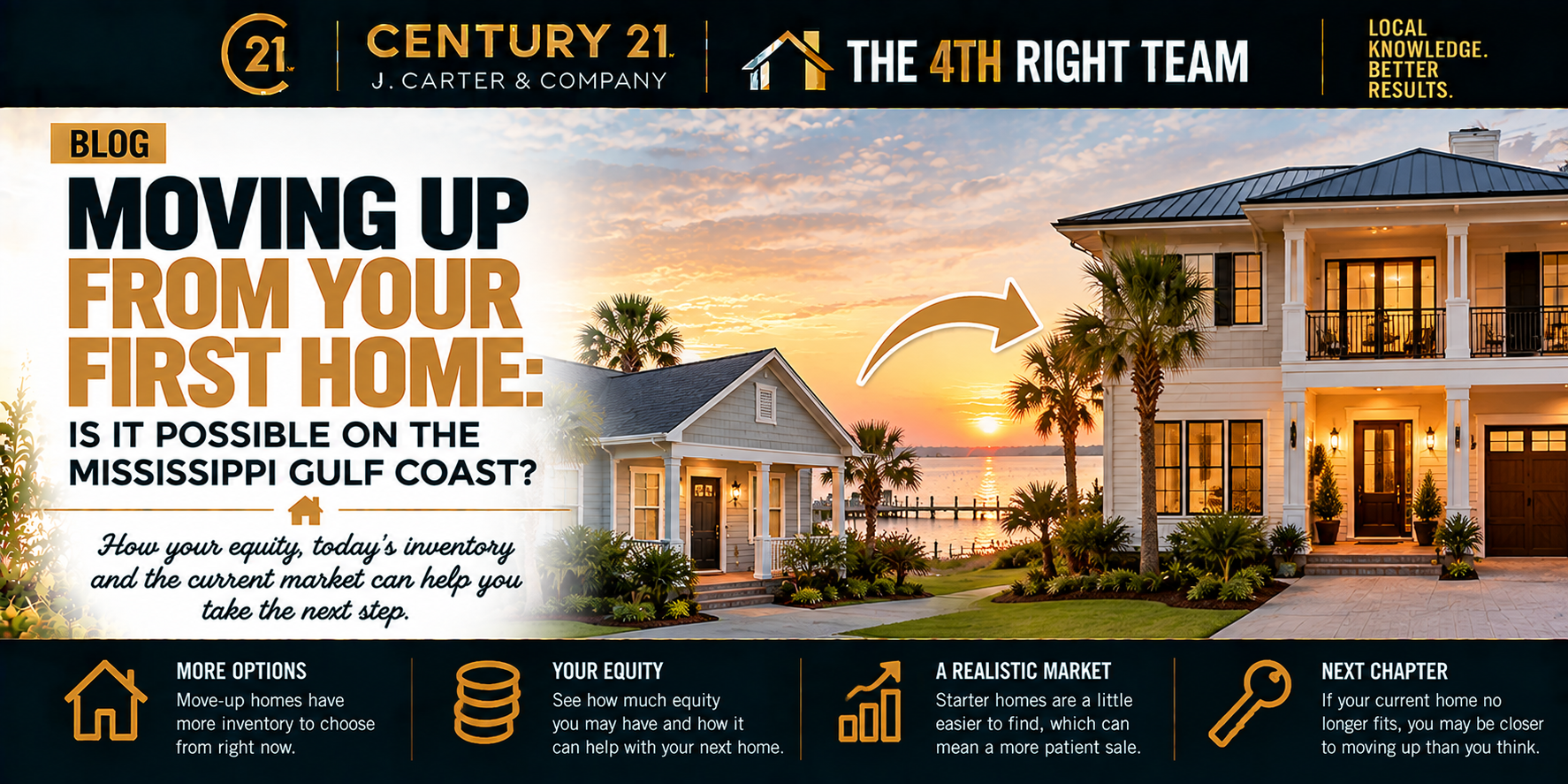
Ready to Move Up? Your MS Gulf Coast Starter Home Can Help
By Randy Richardson, Broker Associate, The 4th Right Team. Updated October 2026.
Quick Answer: If your first home on the Gulf Coast no longer fits your life, moving up may be more realistic than you think. The average mortgaged homeowner nationally now holds about $310,000 in equity, according to Cotality's second quarter 2026 data, and even a fraction of that can cover a big share of your next down payment. Overall housing inventory has grown too, so you'll have more to choose from. There's one catch to know going in. Starter homes have gotten a little easier to find lately, which helps you as a buyer, but it also means your own starter home may not sell itself as fast as it would have a year or two ago.
Your First Home Was Never Meant to Be the Last One
Buying your first place felt like crossing a finish line. It gave you somewhere to build a life, maybe where you got married or brought home a baby or a dog. But for most people, that first house was a stepping stone, not a forever home. If your life looks different today than it did when you got the keys, you're not stuck. Moving up is a normal next step, not a sign the plan went wrong.
Is Starter Home Inventory Still Tight?
The honest answer is mixed. Zooming out, the country has been underbuilding entry-level homes for decades. Starter homes made up about 40% of new construction in the early 1980s and fell to around 7% by 2019, according to Census data compiled by Home Buying Institute. That long-term shortage is real and it hasn't gone away.
The short-term story is different. Zillow's July 2026 report found starter-home inventory up 4.5% year over year while starter-home sales fell 5.4%, with more price cuts showing up at the entry level. So the decades-long shortage is real, but right now buyers have a little more room than the scarcity headlines suggest.
What This Means for Selling Your Current Home
Because starter-home inventory has loosened, your home may take a little more patience to sell than it would have in the tightest years. That's not bad news. It's just realistic. Pricing it right from day one matters more now than it did when almost anything sold in a weekend. The good news is that overall supply has been climbing too, which gives buyers more confidence to shop and keeps homes changing hands.
Two things make your sale smoother. First, know your number before you list. You can get a home value estimate here. Second, get your paperwork straight early, especially anything involving past water or storm damage. Our guide to what Mississippi sellers must disclose about flooding and storm damage walks through it. When you're ready, here's how we handle selling your home.
Is It Easier to Find a Move-Up Home Now?
In many cases, yes. This is where the market favors people moving up. Nadia Evangelou, principal economist at the National Association of Realtors, has pointed out that too much of today's inventory sits at higher price points. That leaves entry-level and middle-income buyers short on options, but it's not a problem for people with more room in their budget. If you want another bedroom, a home office, or a bigger yard in Gulfport, Biloxi, or Ocean Springs, there's more selection above the starter-home range than there's been in years.
Timing helps too. Fall tends to be one of the better windows for buyers here, and we broke down why in Is Fall a Good Time to Buy a Home on the Mississippi Gulf Coast?
One cost people forget when they move up is insurance. A bigger house, a different flood zone, or a newer roof can change your payment more than the price does. Before you fall for a house, read our Mississippi Gulf Coast home insurance guide. And if your next home is north of I-10, check out septic vs. city sewer and what to look for before you buy.
How Much Equity Do You Actually Have?
This is usually the number that makes a move feel possible or impossible. Equity is your home's current value minus what you still owe on your mortgage, and it builds faster than most owners realize.
Cotality puts the average mortgaged homeowner at about $310,000 in equity nationally. Here on the Coast, expect your number to be lower. Home prices in Gulfport, Biloxi, and Ocean Springs are well below places like California and the Northeast, where equity is heaviest, and that pulls the national average way up. That's fine. You don't need $310,000 to move up here. You need enough to cover a solid down payment and closing costs on your next home, and a lot of Coast owners who bought five or more years ago are closer to that than they think.
The only way to know your real number is to run it with actual recent sales near you, not an online estimate. Start with your home value here, then talk with our partner lender about what that equity means for your next payment.
Putting It All Together
Your move up rests on three things working together. Your current home is still worth real money and real interest from buyers, even in a more patient market. The home you're moving up to likely sits in a segment with more choices than the entry level. And the equity you've built can bridge the gap between the two. None of that requires a red-hot market. It just takes an honest look at where things stand.
If you're torn between moving now or holding off, our post Should You Wait to Buy on the Mississippi Gulf Coast? covers that side of it.
By the Numbers
About $310,000: average mortgaged homeowner equity nationally (Cotality, Q2 2026)
About 40%: starter homes as a share of new construction, early 1980s (Census)
About 7%: starter homes as a share of new construction, 2019 (Census)
Up 4.5%: starter-home inventory, year over year (Zillow, July 2026 report)
Down 5.4%: starter-home sales, year over year (Zillow, July 2026 report)
The Bottom Line
Your first home did exactly what it was supposed to do. It gave you a place to start and quietly built you a financial foundation. If your current home doesn't fit the life you're living anymore, let's talk. Between your equity, today's inventory, and a realistic read on what your home will sell for, you may be closer to your next chapter than you think.
Frequently Asked Questions
Is now a good time to sell my starter home on the Gulf Coast and move up?
For many owners, yes, especially if you've built real equity. The market is more patient than it was a couple of years ago, so pricing your home accurately matters, but overall demand and inventory both support a move-up sale.
How much equity do I likely have in my first home?
It depends on your purchase price, how long you've owned it, and local appreciation. The national average for mortgaged homeowners is about $310,000, but Gulf Coast numbers usually run lower because home prices are lower. A local agent can pull recent sales near you and give you a real estimate.
Are starter homes really still hard to find?
It depends on the timeframe. There's a decades-long shortage of entry-level homes nationally. But the most recent data shows starter-home inventory has grown and sales have softened over the past year, so the picture is more mixed than the headlines suggest.
Will my current home sell quickly if I decide to move up?
It may take more patience than it would have a year or two ago, since buyer activity has cooled at the entry level. Pricing it right from the start is the biggest factor in how fast it moves.
What's the easiest way to figure out if I can afford to move up?
A local agent can estimate your home's value and your equity, and a lender can show you what that equity plus today's rates means for your next payment.
Sources
Cotality via CNBC: homeowner equity, Q2 2026
Zillow: starter home inventory and sales trends, 2026
National Association of Realtors: Nadia Evangelou on inventory and price points
Home Buying Institute: long-term decline in starter home construction share
Randy Richardson | Broker Associate
The 4th Right Team | Century 21 J. Carter & Company
Office: (228) 731-3881 | Cell: (228) 547-9999
realtorrandyrichardson@gmail.com
www.The4thRightTeam.com
Looking to SELL or BUY? I know a GUY!